Your cards come to life in the app. What if they came to life on paper too?
This month, the cards in the app have been completely repainted, everyday words have their own album, and we have a question for you: how would you like a real card game in Luxembourgish?
Cards painted by hand… almost
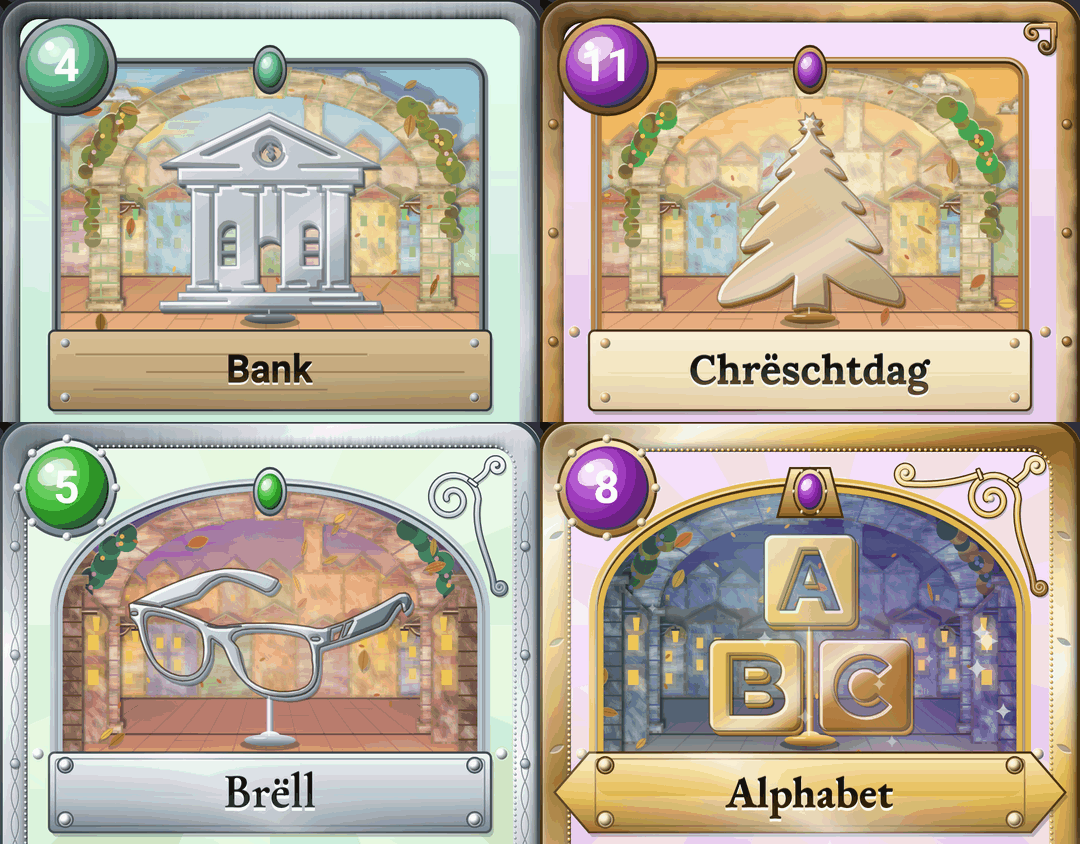
Every card now looks like a little paper theatre. The sky, the clouds, the hills, the town in the distance: everything is cut out of cardboard and painted in gouache, in bright colours. Tilt your phone and each piece of the scenery slides at its own speed, as if you were looking through a window. Clouds drift across the sky, and leaves fall in autumn.
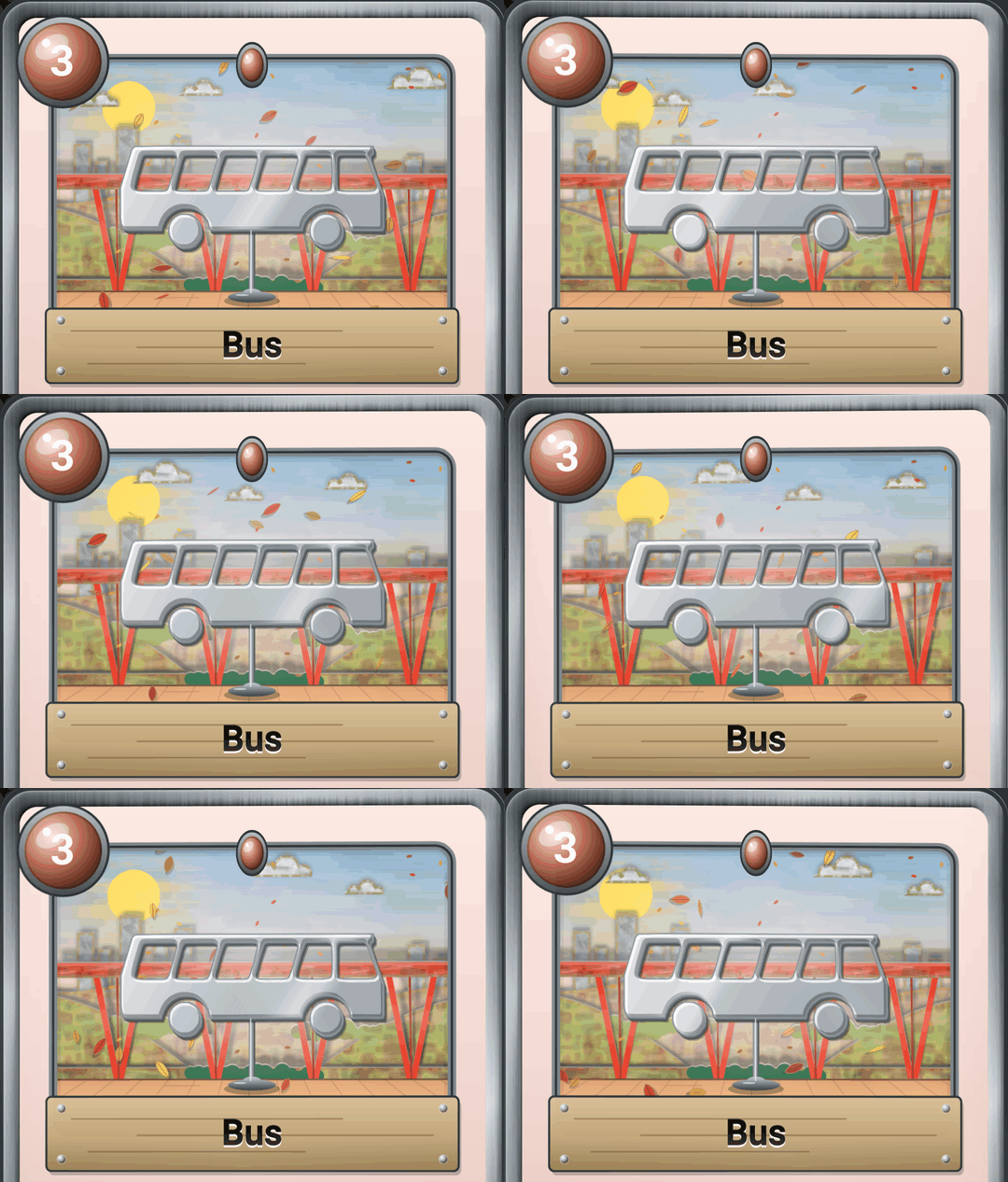
The word's picture now fills the whole window. The cat, the bus, the house can be seen at a glance, even when tiny in the album. And there is a new place to discover: the Breedewee, in the colours of the Grund.
Everyday words, page after page
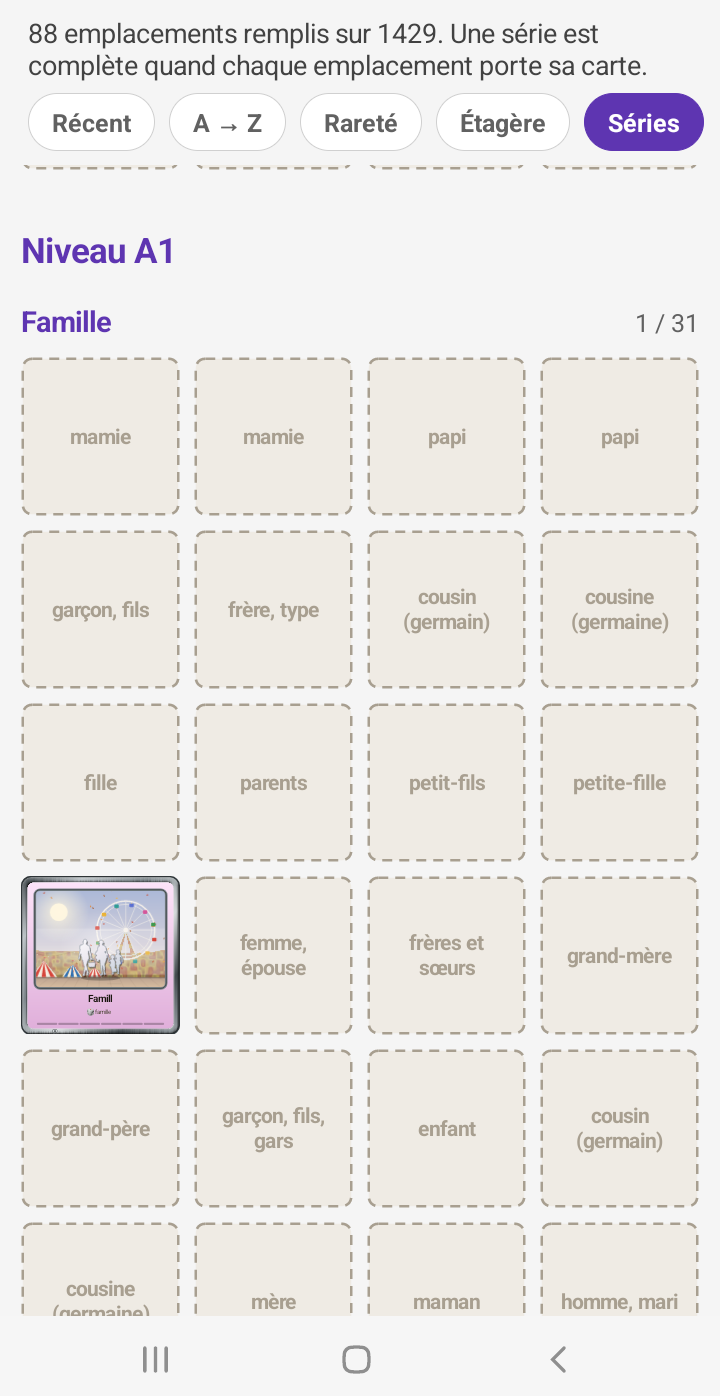
Just arrived in Luxembourg, helping your children with school, or finally ready to try a few sentences? The album now has a “Level A1” series: the first words to know, sorted by theme, such as family, home or shopping.
- An empty slot shows the meaning of the word to find: it is up to you to win it by playing.
- The essential everyday words all have their card.
- Number cards show their figure in large print: “zweeavéierzeg” is 42.
What if the cards left the phone?
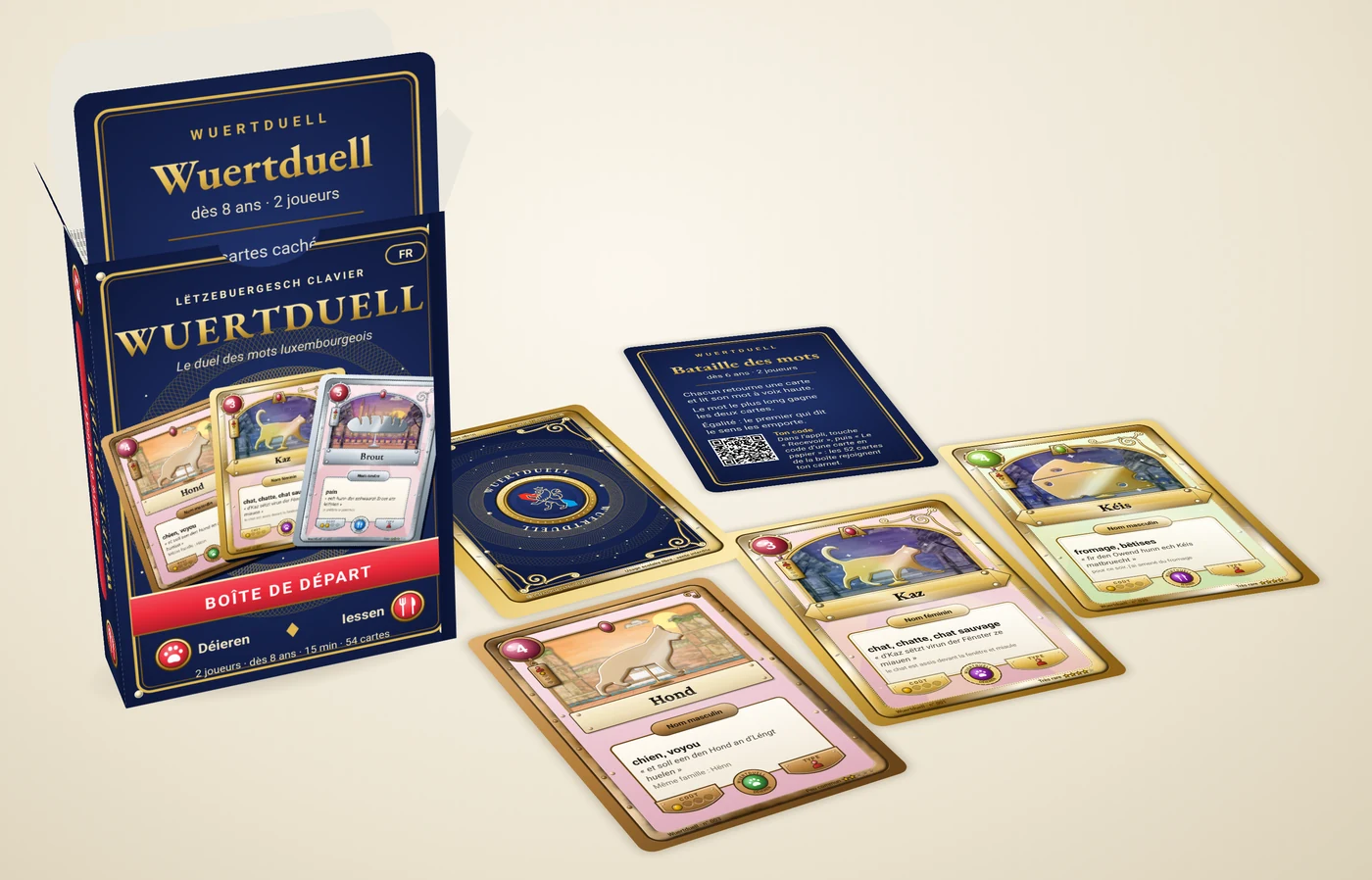
We are imagining a real card game in Luxembourgish, the Wuertduell, for two players, at home or in class, to learn the language without noticing. Nothing has been decided yet: neither the date nor the price. Before going any further, we want to know whether you like the idea.
Two ways to play
- The Battle of Words, from age 6: each player turns over a card and reads its word aloud; the longest word wins. You learn as you play.
- The Wuertduell, from age 8: a real duel where you choose your cards and your strategy. Read the rules (in French).
Boxes to collect
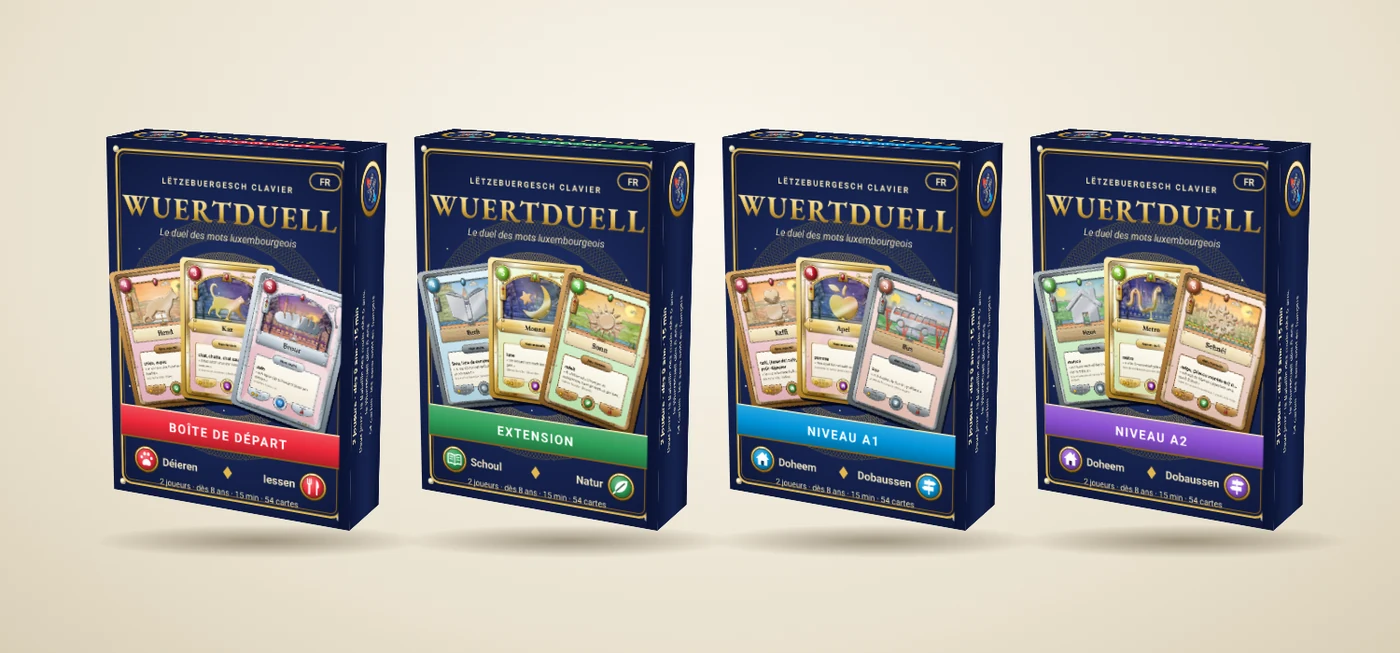
Each box would pit two families of words against each other, for example:
Each box could be played on its own, straight out of the box, or with the others. The rarer a card, the more precious its frame. And a code in the box would add its cards to the album in the app: the collection would carry on on your phone.
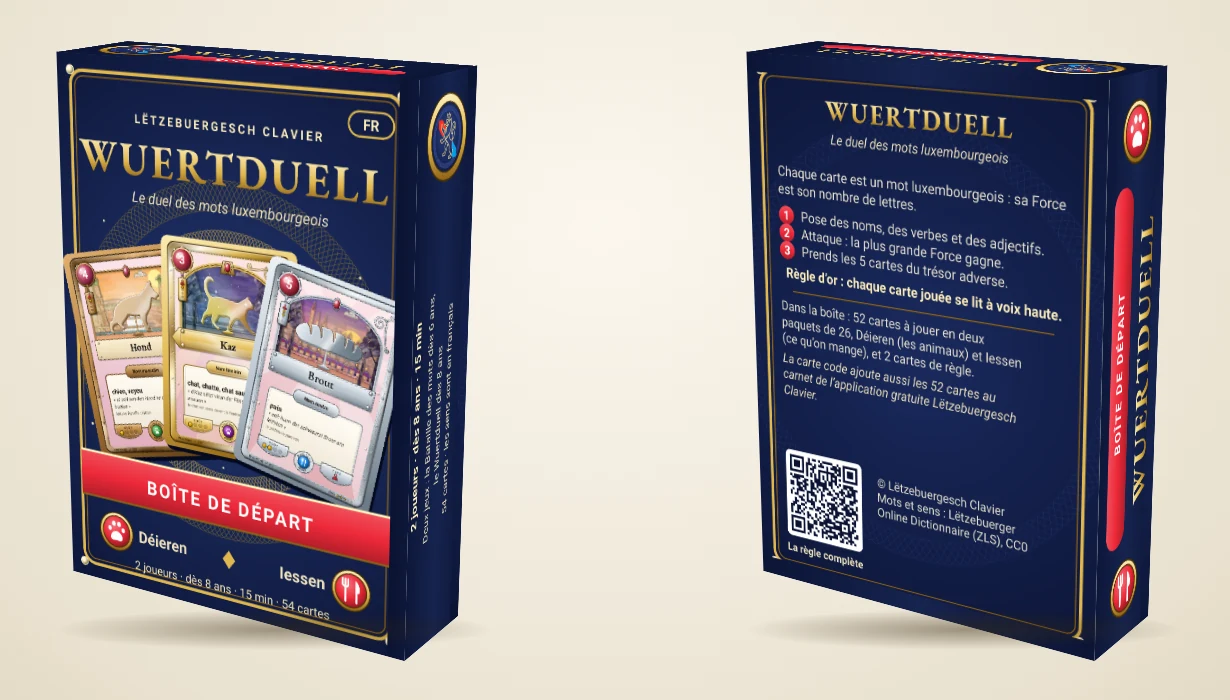
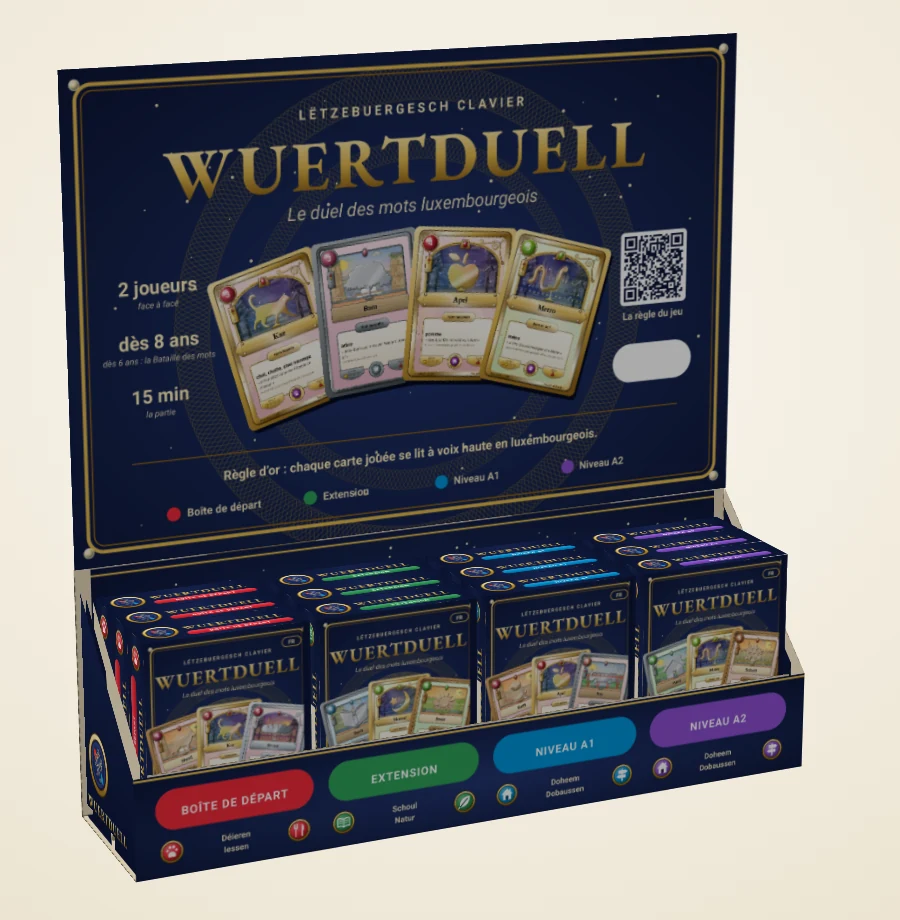
Would this game appeal to you?
One click is enough. If you have another minute, three short questions follow, including one on the price that would seem fair to you. No email address is required.
Easier to read for everyone
Orange and green text that was sometimes hard to read has been fixed. The app is easier to read, in bright sunlight as in the evening.
And for the curious…
Our lab is full of experiments. These are ideas still in the making, which you can try before anyone else:
- Who said what? You drop in a recording of a conversation in Luxembourgish. The text appears, with the name of each person speaking.
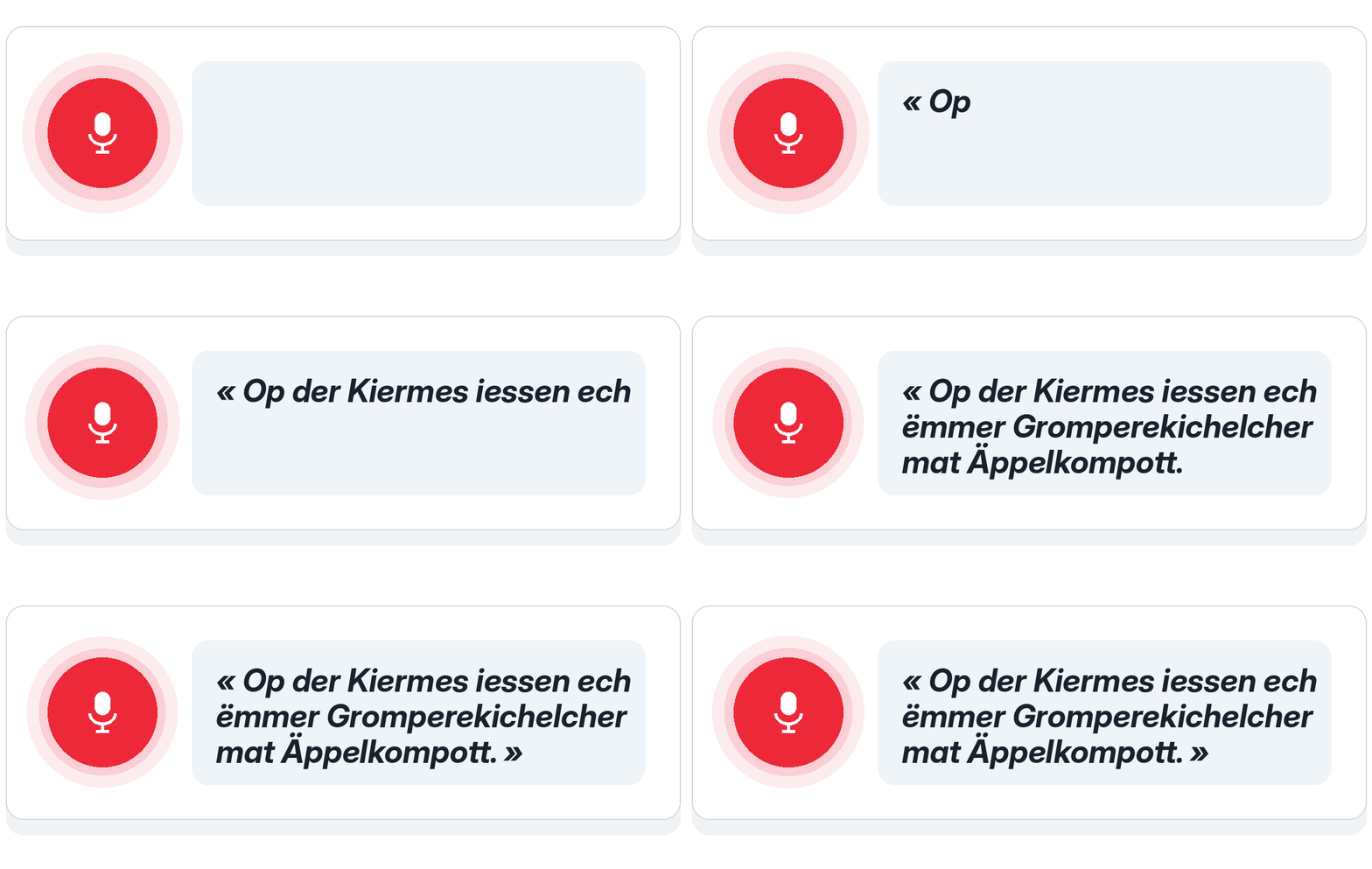
- Live subtitles: someone speaks Luxembourgish and the text appears on screen as they go, with its French translation just below.
- An app for your meetings: it listens to the meeting, subtitles each sentence and then offers you ready-made minutes.
These experiments are not finished yet, and that is exactly what makes them fun to try. Your feedback helps us improve them.
And a treat for the eyes
One street, four times of day. The most common card is set in the morning, the rarest in the dead of night, under a golden picture.
And still the keyboard that understands you
The cards are the bonus. Every day, the keyboard suggests the right word as you type, catches your typos, and writes for you when you speak Luxembourgish.
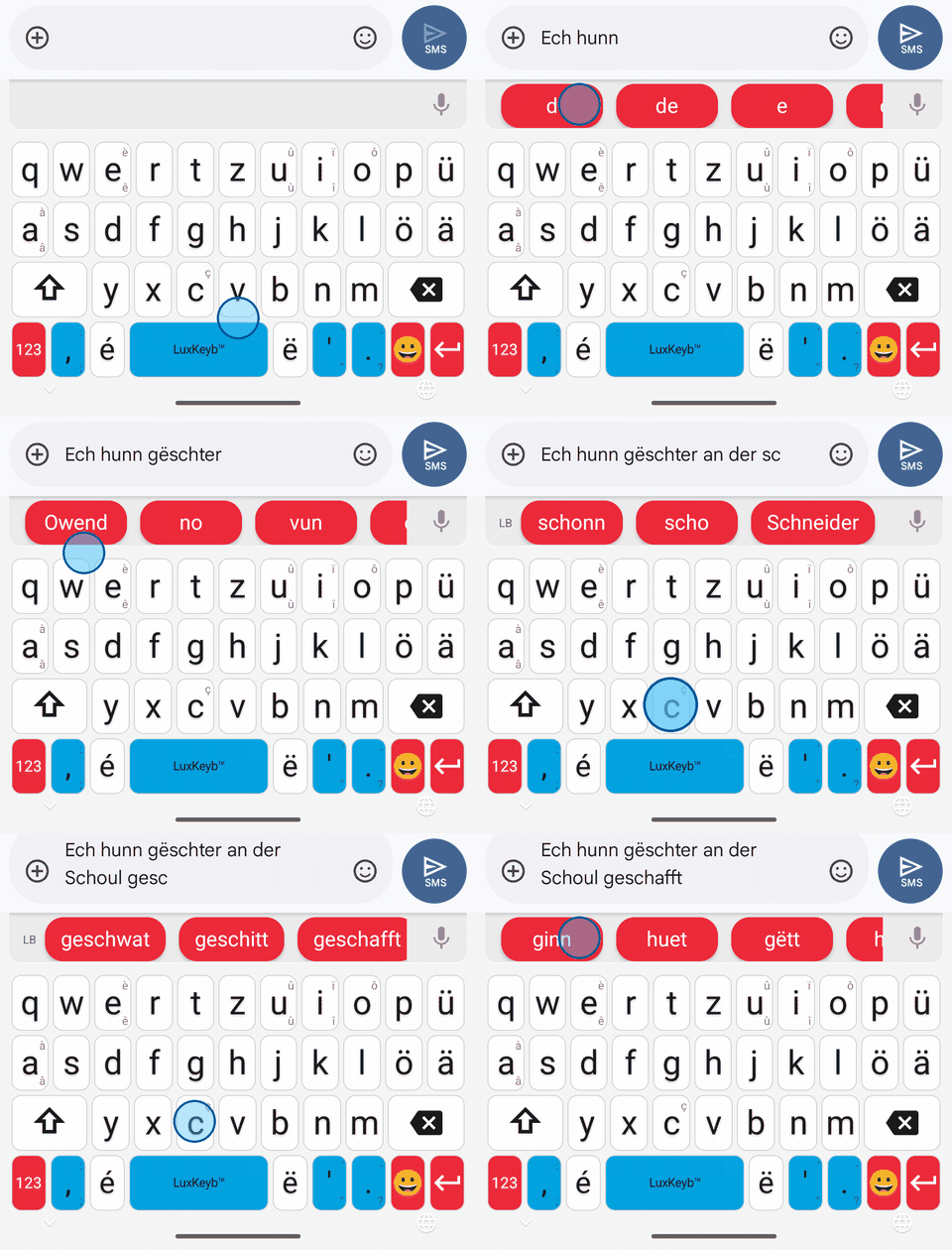
You speak it. Now you write it.
Update on Google Play